
Choosing Lensing for Your Next Project: The Shine Cine Lens Decision Tree
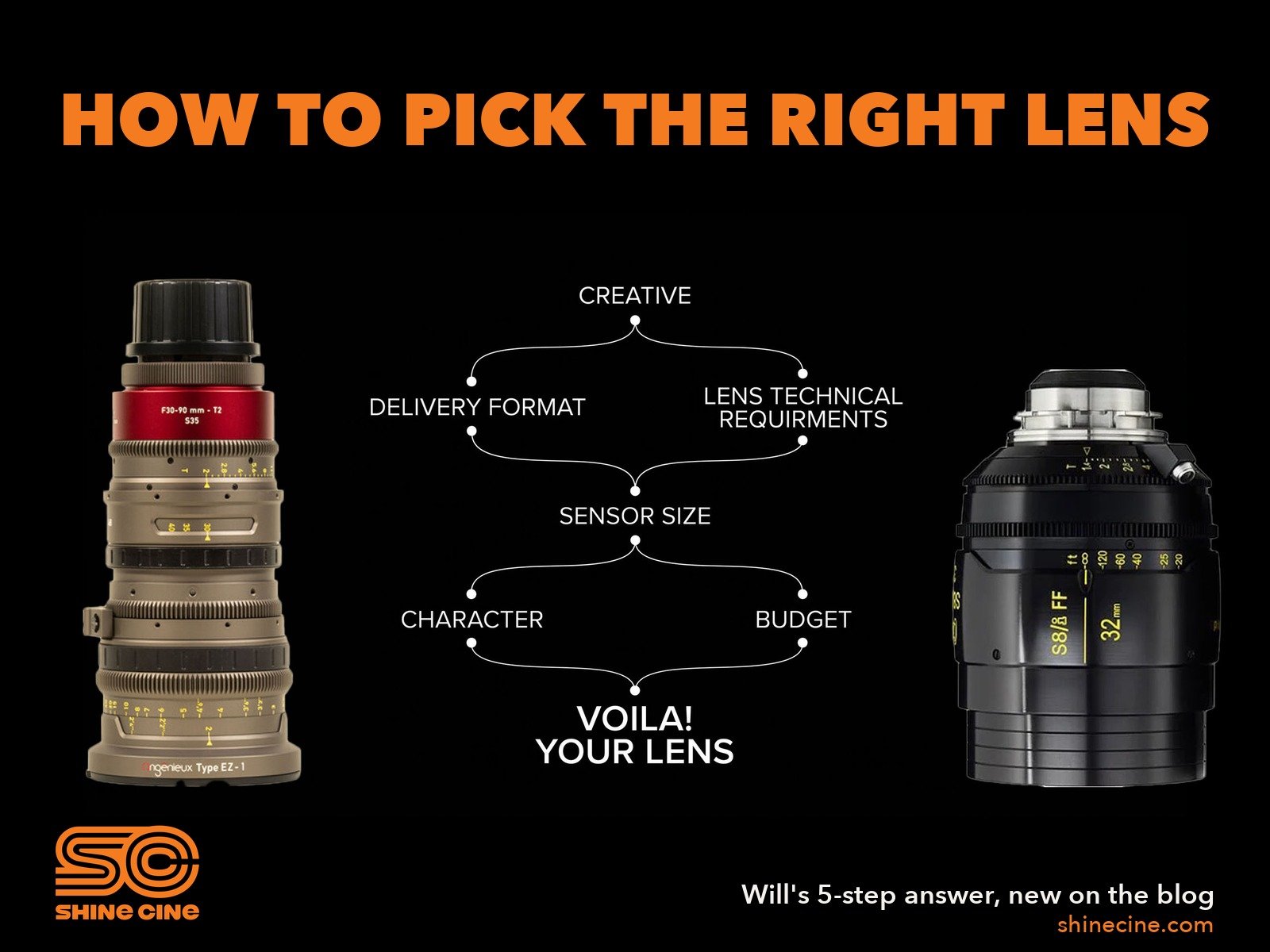
Will’s Process of how to pick a lens for your next project, he calls it the Lens Decision Tree but it looks more like a flow chart than a tree.
Last night we hosted our lens workshop, and the goal was simple. Equip filmmakers with the knowledge to keep them from the classic blunder that many find themselves in:
Never start a land war in Asia.
Just kidding.
Putting your dollars in the wrong place, and making the creative of your project suffer.
At Shine Cine we are mostly concerned with the success of your project. We provide the lens and camera rental packages you need to make the art you set out to create, whether that is a film, a music video, or a broadcast commercial, right here in Texas.
Gear is super fun, it gets a lot of airtime in the collective filmmaking zeitgeist, but at the end of the day, it can either be an enabler, or a major roadblock to creative success.
So here is the real question. In the real world, why do I choose Lens A over Lens B?
I can't go over every reason, but I can give you a framework that will help you have a decision tree to take on your next project. The interesting thing is that you can approach this framework from any of these points, but I'll take this from what I think are the most important.
The Shine Cine Patented Lens Decision Tree
At the top:CREATIVE.Like I said before, this is always the first question. What are we actually trying to accomplish?This splits us into two paths:DELIVERY & TECHNICAL REQUIREMENTS.Once these have been tackled, then we get to wrestle with:CAPTURE FORMAT.Then we get to the final branches:CHARACTER & BUDGET.And then, voila! You have a lens.Let's dive into each one.
Creative
This. Drives. Everything.
This is where we get out why. What are you shooting? Commercial? Indie feature? Music video? Documentary?Are we shooting a medical piece and the call is for sleek and modern, are we doing a music video that just needs something whacky and avant garde?When you bring a project to us, my first question is, what are you trying to do? And how can we accomplish that?This drives us to the first branch off.
Technical Requirements
Are we shooting a cinematic travel doc, where everything has to be lightweight? Are there lots of VFX and we need the lenses to get out of the way to make post easier? Are we doing a oner?Sometimes this alone can drive a lens choice entirely. Are we doing a drink spot and we wanna put the lens inside a glass or down a bottle? We'll need a macro probe lens.A great example of this is a job coming up that we're servicing. It's a workplace mockumentary comedy. That genre has a distinct style, and that style leans heavily on crash zooms and lots of flexible handheld movement.They needed zoom lenses that are parfocal, meaning a zoom lens that maintains focus on the subject even while zooming in or out, so you can do those office style reaction shots. Because of the fluid movement, you need versatile, does it all zooms that have a wide all the way to tight in a single lens. They need to be at least small enough to be used handheld without killing the operators.When me and the DP looked at those requirements, it narrowed down actually very fast. There are only so many lenses that have been made to date that do all of those things. All of them are Super 35mm, so that even chose the format of the project.This leads us to…
Deliverable
Is this a show? Is it for socials? Is it a broadcast or streaming ad? What are the resolution requirements?For that mockumentary show, it's for streaming, and streaming requires 4k 16x9, so that lens choice even drove what camera they shot on.
Capture Format
On most jobs, the first two branches might be pretty open. But this is where it gets interesting and a lot of creative choices are made.We live in an amazingly blessed age where almost every format out there is available to most projects at a variety of budget levels. You have 65mm/Large Format, Full Frame 35mm, Super 35mm and Super 16. Even Super 8 and Neo/Vintage Mini DV or VHS tape.
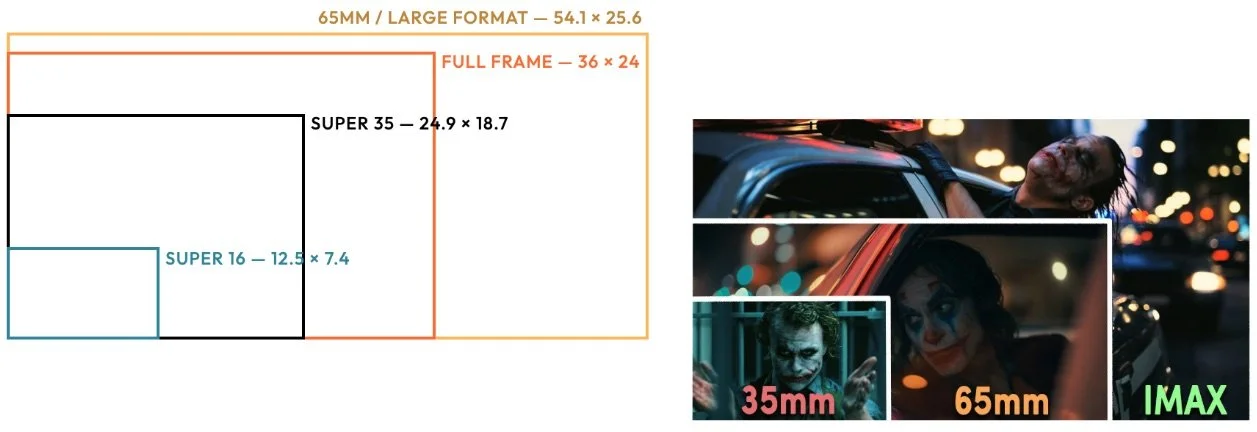
65mm
In the gear sales life cycle, large format is a huge buzzword. "IMAX certified" etc. It seems like everyone is coming out with a 65mm format lens or camera.Originally, large formats were designed for big vistas and for projecting on massive screens with super high fidelity.With all of the hype, we're now even seeing TV shows and commercials shoot on them. A lot of people are in the bigger is better mindset and are kind of forcing this look onto projects for the look's sake.There are some real drawbacks to shooting in large format.Crazy shallow depth of field, which creates a focus pulling problemIt hurts the texture of the set, makes people look like they are floating around in a sea of bokeh rather than immersing the audience in a story world If you want the true resolution and scale, you need to close down, which means you need a larger lighting budget to compensate for the light loss.There are some pieces that excel in this format, but if you choose a format for the format's sake, the product usually suffers.Why shoot this? In my opinion, vistas, big set work, large screen delivery. This excels in big movie land.
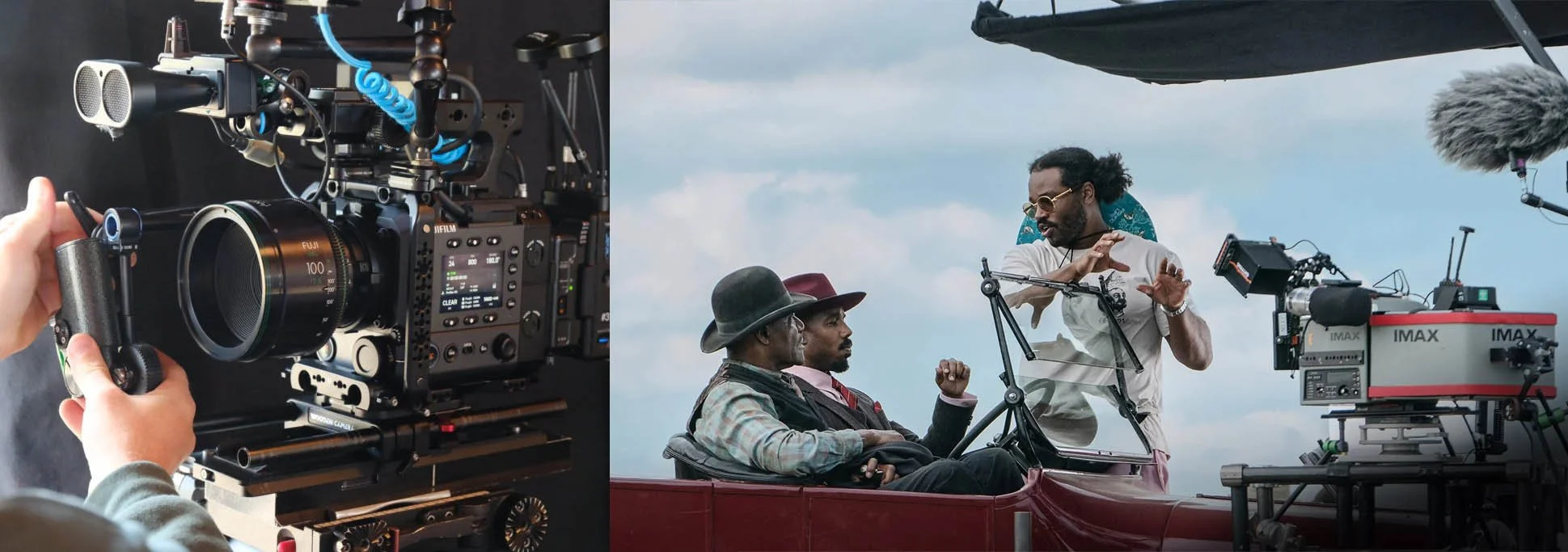
Fujifilm Eterna 55 (affordable 65mm) & Imax Film 65mm

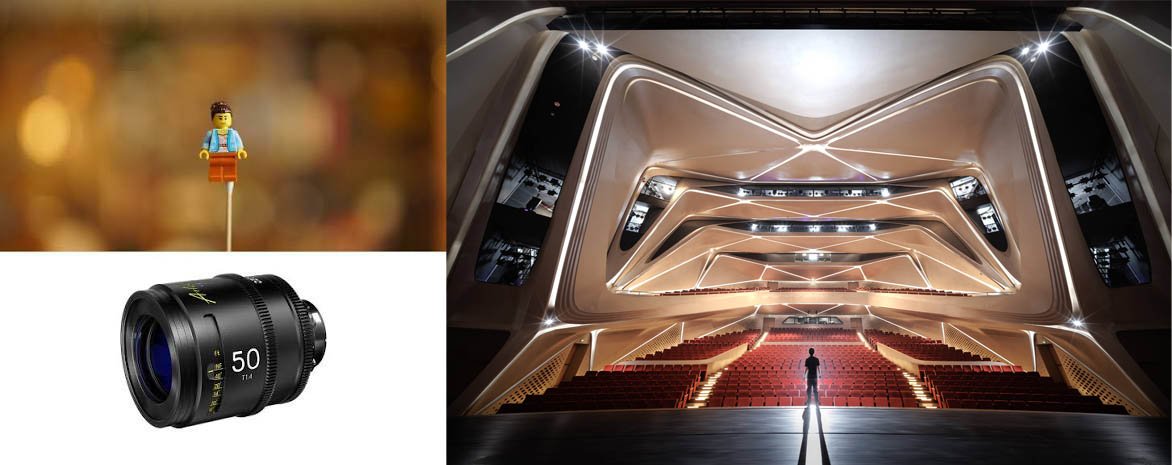
65mm Shallow Depth of Field Example
Full Frame
Another huge buzzword. For a long time the YouTube camera generation has held this up as the superior format. But it's actually really subjective.It is a beautiful format, but you run the risk of closing yourself off creatively. Also there are SOO many good options for wonderful lensing in more traditional movie formats. (We'll get there in a moment.)Some good reasons to shoot full frame? Maybe you want to mimic the look of old school full frame film photos but make it motion. Do you have a lot of wides you wanna do? Full frame gives you a little more room on the wide end because it's a larger area. It’s also an affordable way to get shallow DOF.
Full Frame Lens like the new DZO Arles. And a wide angle example from Venus Laowa 10mm T2.9 Zero-D VV Cine Lens for PL Mount
Super 35mm
The standard. I'm a little biased because this is my fav format. It held up cinema for decades before the internet camera marketing machine. Most movies you have seen are in this format.Both Full Frame and Super 35 are very flexible. But with Super 35 you get to dive into a world of amazing legacy lensing that is proven.Another benefit is that this can help on the budget side. A lot of these amazing lenses have been around for a long time and have stable market rates, so you can get amazing pricing on lens sets that probably shot your child's favorite movie.Why choose this format? Flexibility, and simple cinematic flavor.
Super 16
There's been a huge uptick in shooting Super 16. Film is back and it's a great way to get an undeniably filmic, analogue look for a more affordable price for development and scanning.This one is a pretty direct top down from creative, and as there are only so many lens sets that have wide angle options for this image plane, you have only a handful of options with lensing.But because your texture is coming from the celluloid itself, it's not as much of an issue. Most legacy Super 35 sets have a Super 16 wide angle expansion set.You can also fake this look with digital, shoot on Super 16 lenses and do film emulation in post. But that's a whole other class right there.
Bonus
People are trying to creatively stand out. So we're seeing music videos and ads trying whacky tricks like shooting Mini DV or old broadcast cameras to get a nostalgic early digital look to set the project apart.
Character
This is where many people start this discussion. But in my opinion this should come after we've had all of those other considerations handled.Lenses fall into these main categories:Vintage & WhackyVintage High Performance, Neo Vintage, Standards Modern, and Clean Budget Heavy Hitters, Anamorphic lenses are those that produce a widescreen aspect ratio by horizontally squeezing the image onto the sensor, resulting in a unique look characterized by oval bokeh and horizontal lens flares.This is the fun part. At the workshop we took a look at the lenses on the table and talked about why we would choose each. If you want to get hands on with cinema lenses before your next rental, come by the shop, we love this conversation.
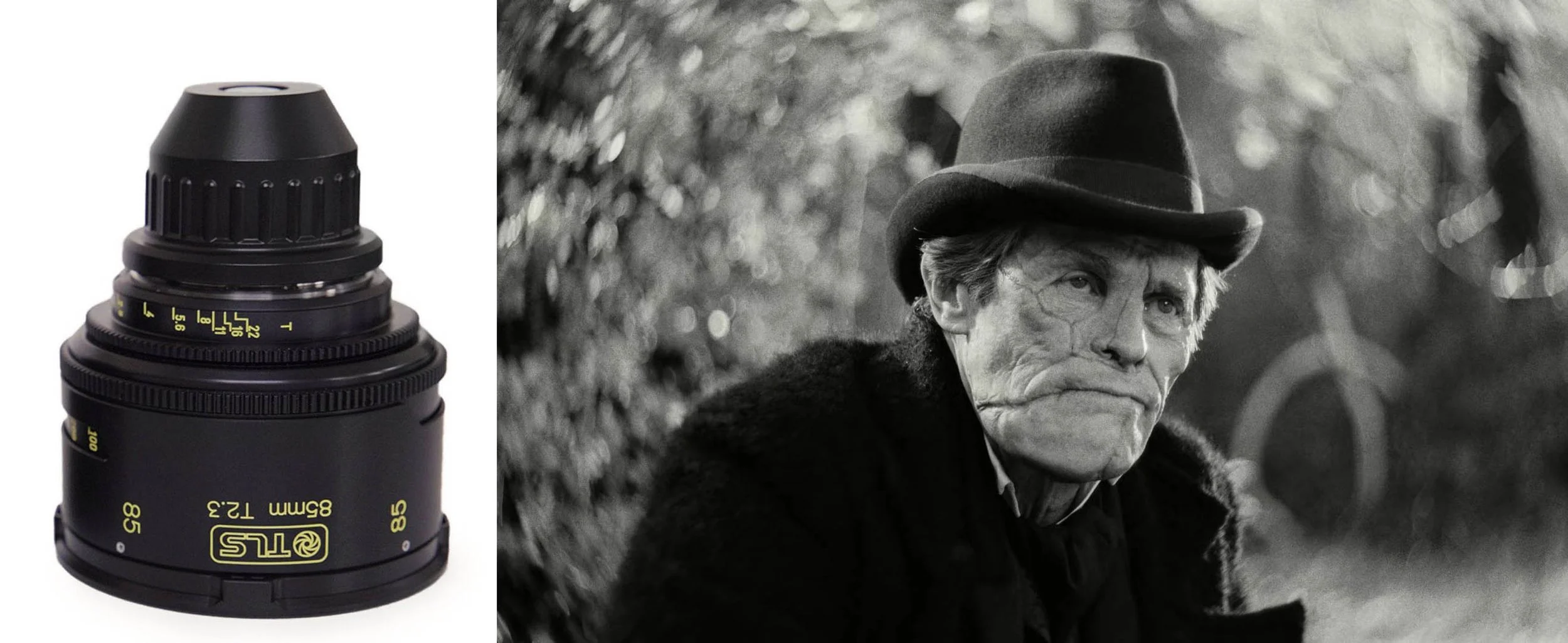
Petzval Rehoused Lens and example from Poor Things movie.
Budget
Now this is the part we all dread. It's a checkpoint for us to get to. Sober up and start from the drawing board. Most often the budget is driving the whole creative process.Here is a real consideration for this conversation.Don't be so caught up in brand names and format buzzwords that you end up sacrificing precious dollars that could have shown up on camera more (like in art, sets, and locations) rathern than the coolest lens you can think of. What is going to make a difference to the audience?We saw this firsthand on a recent job. The director wanted the brand name primes, but ended up admitting the power of the budget heavy hitter lens. The money saved showed up on screen.
Finally! Your Lens!
Okay! We did it. We went through the whole process and you found your lens for the project!
Why Rental Is the Way
We live in such a consumeristic society, where there are new cameras and lenses every week it seems. It is super fun to own equipment but in the long run it actually is a hindrance to you.We live in an age where we've solved the digital camera and lens problem! There are SO MANY options. And not all are right for every project.The main problem of owning, other than just depreciation, is that you are creatively locked into whatever you own, because you either want to force it on the job to make your money back, or you get trapped into including your gear in your rate and getting pigeonholed into a certain type of content, because you can't own everything. (Unless you have a millionaire uncle, in which case, can you introduce me? I have a screenplay to pitch him.)This is the beauty of rental! You can truly choose what is right for the project. You have access to the world's gear supply without taking on the long term risk. The world's your oyster, and we want to give it to you.
Source Your Next Lens and Camera Package in Texas
That's the whole tree. Creative, Technical Requirements and Deliverable, Capture Format, Character, Budget, and voila, your lens.Whether you're prepping an indie film, a music video, a documentary, or a broadcast commercial, Shine Cine is the best place in Texas to source cinema lenses and camera packages for your next project. Bring us your creative, and we'll help you walk the decision tree and build the right lens and camera rental package for the job.Have a project on the calendar? Get in touch and tell us what you're trying to do. We'll help you figure out how to accomplish it.I hope this is helpful, thanks for letting me gab about this. Want in on the next workshop? Keep an eye on the news page and IG for upcoming dates.
Frequently Asked Questions: Renting Cinema Lenses in Dallas & Fort Worth
How do I pick a lens for my commercial or music video in Texas?
Choosing the right lens follows a standard "decision tree" based on your camera format, aesthetic goals, and production style. When you book gear at a local camera rental house like Shine Cine in Fort Worth, you'll want to evaluate these three core factors before your shoot:
Sensor Coverage: Determine your camera's sensor size (Super 35 vs. Full Frame). If you are shooting on a Full Frame camera like the Sony Venice 2 or RED Raptor, you need lenses with an image circle large enough to cover the sensor without vignetting.
Optical Look: Do you want the ultra-sharp, high-contrast aesthetics of modern optics for a corporate commercial, or the softer, warmer characteristics of vintage glass for a stylized music video?
Prime vs. Zoom: If your production requires precision lighting and a shallow depth of field, rent a set of prime lenses. If you are shooting a fast-paced documentary or running-and-gunning across Dallas, a parfocal cinema zoom lens will give you the speed and versatility you need.
What is the best lens to film on for a high-end production?
There is no single "best" lens—different manufacturers are chosen for the specific optical characteristics they bake into the footage. For big commercial productions and films shooting in the DFW area, these are the industry standards:
Arri & Zeiss: Known for surgical sharpness, high contrast, and neutral color rendering. These are heavily favored for high-end broadcast commercials and clean corporate spots.
Cooke: Famous for the "Cooke Look," which is slightly warmer, softer, and highly flattering to skin tones, with smooth focus roll-off. This is a top choice for narrative films and beauty campaigns.
Anamorphic : The gold standard for widescreen cinema and music videos. Anamorphics squeeze the image, providing iconic horizontal lens flares and cinematic oval bokeh.
Angenieux: The industry standard for high-end cinema zoom lenses, perfect for fast-moving commercial shoots that can't afford to swap lenses constantly.
What is the difference between PL and E mount cinema lenses?
When renting lenses in Dallas or Fort Worth, the choice between PL and E mount comes down to mechanical rigidity versus adaptability. Heavy cinema glass requires a mount that can handle the weight and the torque of wireless follow-focus motors.
FeaturePL Mount (Positive Lock)Sony E MountDesign StandardThe global industry standard for professional cinema cameras (Arri, RED, Sony Venice).The standard for Sony mirrorless and compact cinema cameras (Sony FX3, FX6).DurabilityHeavy-duty, locking mechanism designed to hold massive cinema zoom lenses without sagging.Standard bayonet mount. Heavy cinema lenses require external rod support to prevent mount damage.AdaptabilityLong flange distance; cannot be easily adapted to other mounts.Extremely short flange distance; can adapt almost any lens (including PL, EF, and vintage glass) with a simple adapter.
Why rent from a local camera rental house instead of shipping gear?
Shipping lenses introduces massive liabilities to your production, from transit delays to calibration issues caused by rough handling. Renting locally in the Dallas-Fort Worth area ensures you have immediate access to well-maintained gear, expert support, and emergency replacements if something breaks on set and ability to prep/test gear in a local prep bay.
At Shine Cine, every camera and lens rental includes a free prep day in our dedicated prep space. This allows your Camera AC’s to build the camera package, test wireless systems, and map the lenses on a chart before your commercial shoot begins, ensuring zero downtime when you arrive on location. Plus, because Shine Cine is a locally owned Fort Worth camera shop, all of your equipment rentals qualify as in-state spend for the Texas Moving Image Industry Incentive Program (TMIIIP), helping your production maximize its cash rebates.