
Entering Our Podcast Era
yes, yes we did…
A Look Into the Prep Bay and Episode One
Shine Cine is proud to announce the first installment of The Prep Bay, our brand-new podcast series designed not only to help you but also to engage deeply with our audience. We are Fort Worth’s dedicated cinema rental house, run by seasoned gear heads who have your back on every set. Our storefront isn't just a warehouse for picking up equipment—it's a community hub with great vibes where local filmmakers gather to talk shop, build networks, and celebrate wins.
Hosted by our resident cinephile and rental manager, William Willer, this podcast shares the raw, technical, and life-changing conversations that happen right here on our shop floor. For our premier episode, we brought out a heavy hitter live in front of our Fort Worth audience: Chris D’anna from Cooke Optics.
"We have an Academy Award. It was a special award given to us in 2012 for helping to define the look of motion pictures over the last century. We all just want good stories first and foremost, and we want those stories to work."
— Chris D’Anna, Cooke Optics
From Dimpled Golf Balls to Hollywood Ubiquity
If you think Cooke Optics is just another lens manufacturer jumping on modern industry hype cycles, think again. The company is over 130 years old, founded by William Taylor in 1893. Taylor was a master of metrology (the science of measurement), but his relentless entrepreneurial spark led to some wild historical crossovers. For instance, Taylor is actually the man who invented and patented the dimpled golf ball in 1906 after realizing that older, divoted balls flew farther than smooth ones.
The true optical breakthrough came with the Cooke Triplet, a lens design that corrected a massive array of early photographic aberrations and changed imaging forever. Using this design, Cooke became the first company ever to engineer purpose-built cinema lenses featuring follow-focus mechanics.
Cooke’s rise as a company came after the legendary survival story of Sir Ernest Shackleton and Frank Hurley. Frank Hurley, the cinematographer, shot the entire expedition on Cooke lenses, from the beginning to the shipwreck and the crew's recovery. This showed that Cooke was a trusted brand and fundamentally joined them at the hip with the history of cinema
Tech Talk: What Actually Drives Lens Character?
In an era of rapidly accelerating gear cycles, where a new lens manufacturer pops up every few months at NAB, Chris shared what sets a premium, high-end cinema lens apart from a budget-tier alternative - lens construction.
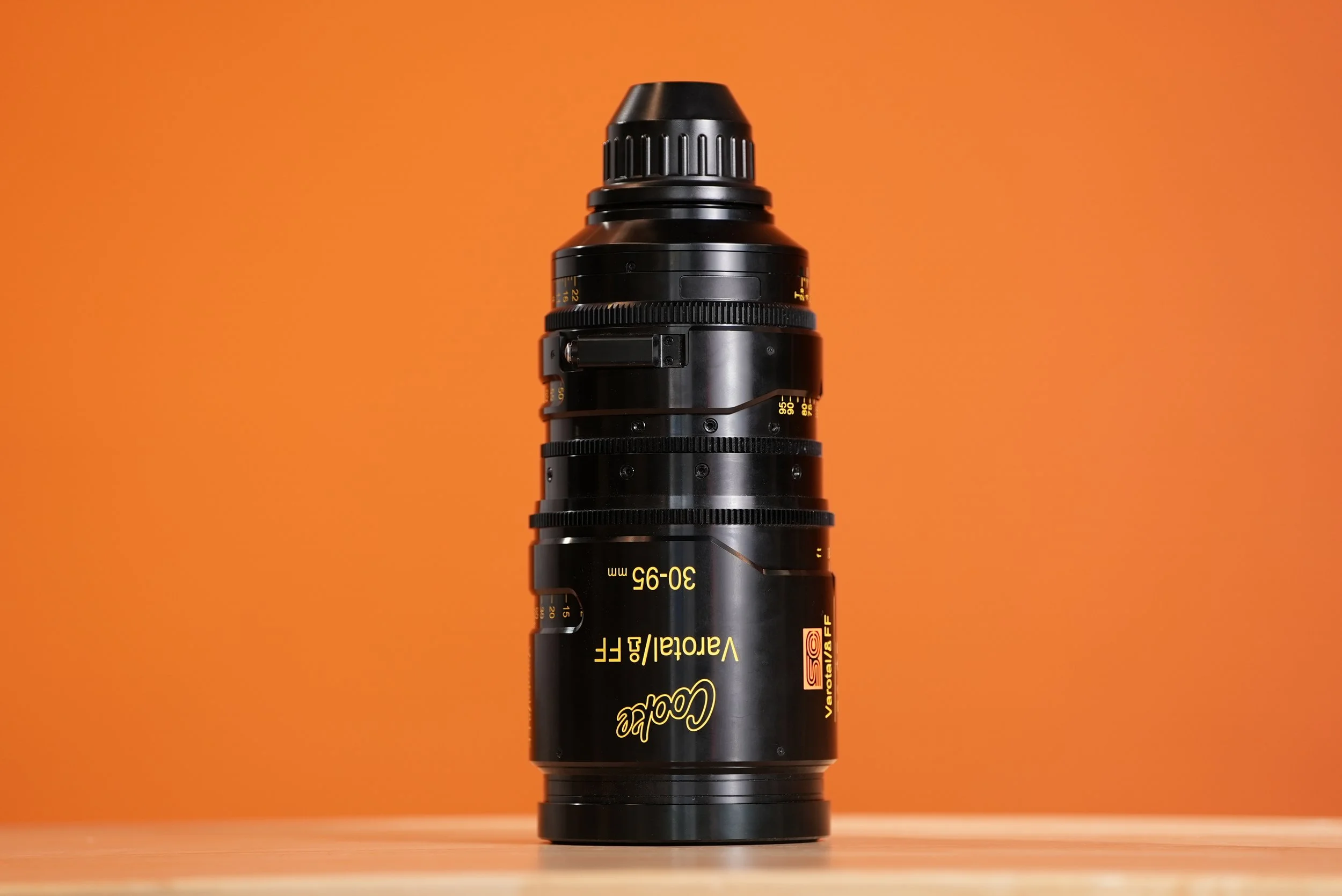
When it comes to examining, Chris says to think of a premium cinema lens like a Formula 1 car. It is a high-performance machine built with sustainability in mind; it is deliberately engineered to be completely field-serviceable so it can stay on the road for decades. These lenses are a great example of what it means to have a serviceable, high-quality lens that people love.
Chris D’Anna also dropped a massive truth bomb regarding one of the biggest buzzwords in modern cinematography: lens coatings.
The technical reality is that, if done correctly, lens coatings do not affect the core lens character. A coating's primary engineering purpose is light throughput (similar to anti-reflective coatings on eyeglasses). In a complex cinema lens with over a dozen optical elements, uncoated glass would lose roughly 2% of its light at each glass-to-air transition. Without modern multicoatings, less than 2% of the total light entering the front element would ever reach your camera's sensor.
When we talk about true lens character, we are looking at characteristics hardwired into the elemental design:
Focus fall-off and edge-to-edge resolution roll-off.
Geometric distortion and spatial compression.
Internal contrast and how light spectra defocus.
While flare artifacts are often a side effect of older, degraded, or single-coated vintage single layers (such as those used in the Cooke Special Panchro Classics to meet specific aesthetic demands), true character is an architectural philosophy executed during the glass's construction.
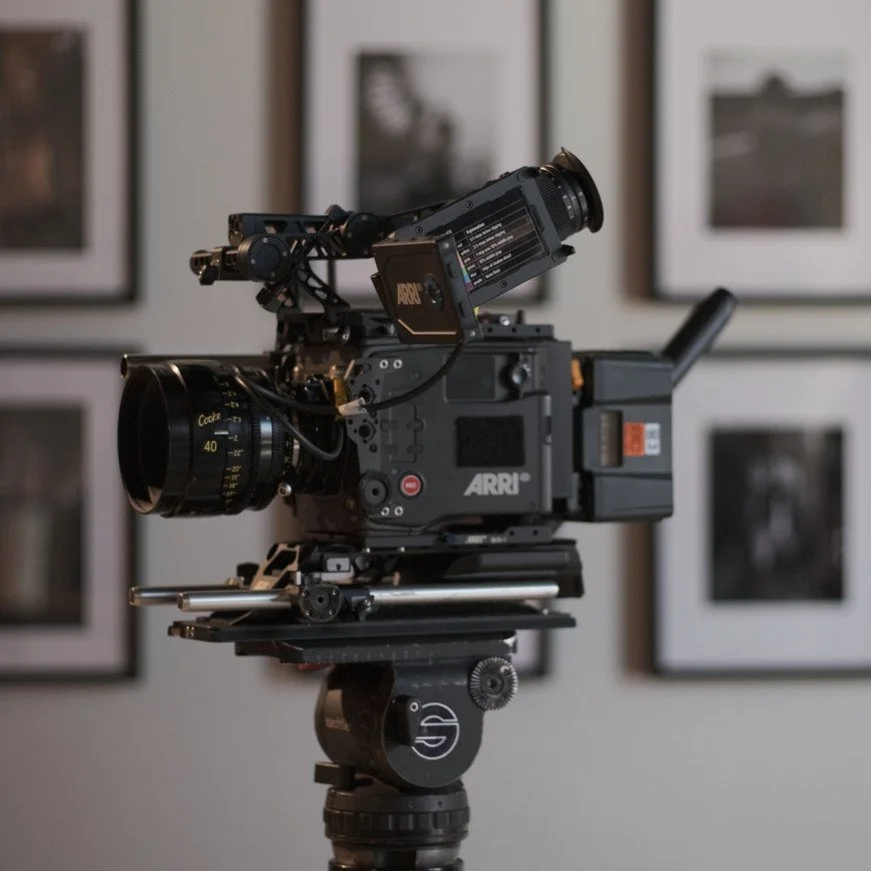
Format, Fall-Off, and the Realities of Camera Movement
With the current industry obsession surrounding large format, IMAX, and 65mm image circles, cinematographers face more structural choices than ever before. But how do you choose between Super 35, full-frame, or extra-large formats from a pure optics perspective?
According to Chris, the decision should be dictated by camera movement and blocking, not pixel counts or sensor hype:
Super 35 for Dynamic Movement: High-speed camera work involving complex crane movement, whipping, or intricate blocking (such as the Super 35 work on Spielberg's West Side Story or Venice crane sequences in the Matilda musical) benefits heavily from Super 35. Pulling focus at wide apertures on extra-large formats during rapid physical movement is a near-impossible task for an AC. Super 35 provides the depth-of-field control required to keep fast-moving action pin-sharp.
Full-Frame for Static Texture: More modern, locked-off narrative styles with heavy cutting and clean framing lend themselves beautifully to full-frame configurations, allowing the optics to resolve wide-angle perspectives with distinct focus fall-off without requiring wide-lens geometric distortion.
DFW Filmmaker's Optical Reference Guide
To help local cinematographers navigate the North Texas film scene and match the right glass to their unique project blueprints, our engineering team compiled this quick-reference technical breakdown of iconic Cooke optics and their definitive look profiles.
| Lens Series | Format Compatibility | Definitive Visual Character | Ideal Project Match |
|---|---|---|---|
| Cooke S4 / S4/i | Super 35 | Flattering skin tones, smooth contrast, minimal geometric distortion, organic focus roll-off. The definitive "desert island" lens. | Gritty, high-end narrative features (e.g., No Country for Old Men, Harry Potter and the Half-Blood Prince). |
| Cooke Anamorphic/i Full Frame | Full-Frame / Large Format | Classic anamorphic characteristics, oval bokeh, flattering horizontal oval flares, controlled distortion with signature warm texturing. | Widescreen theatrical features, cinematic musicals, high-budget commercial campaigns (e.g., A Star Is Born). |
| Cooke Look Classics / Speed Pancro | Super 35 / Large Format Variants | Vintage vintage-era texture, signature focus fall-off, warm color space rendering, safe serviceability matching original 1930s configurations. | Period pieces, stylized prestige television dramas, high-contrast black-and-white cinematography (e.g., The Crown, Casablanca). |
| Cooke SP3 | Mirrorless Mounts (E, Z, RF, L) | True Cooke Pancro look optimized directly for mirrorless digital sensors. Lightweight, compact architecture built for solo operators. | Indie features, run-and-gun documentaries, gimbal/gimbal rigs, lightweight multi-camera podcast setups. |
Why Source Your Glass and Production Rigs Locally?
Securing high-end film and video production supplies shouldn't require a grueling logistical slog. Here is how we are actively flipping the script for filmmakers across North Texas:
Community-Catering Space: Our storefront is a fully integrated communal space designed to break down the cutthroat, isolating nature of the rental industry. It functions as an active hub in Fort Worth where local directors, camera operators, and grip technicians can network, review lookbooks, and talk shop over a fresh cup of coffee.
Meticulous Quality Control: Every lens barrel, camera body, and lighting modifier is thoroughly cleaned, organized, and technical-tested before it leaves our bay. We eliminate standard rental headaches by ensuring your upcoming rental is prepared to factory spec by certified experts.
Fort Worth Local Grounding: You shouldn't have to burn critical schedule time or production dollars driving back and forth to Dallas just to secure the production basics. We provide premier cinema support right here in Cowtown (Fort Worth) to fuel one of the fastest-growing indie communities in the country.
Sourcing your gear locally eliminates logistical roadblocks and optimizes your bottom line. Every dollar spent on our high-end film and video production supplies is fully qualified for the Texas Film Incentive. Because Shine Cine is independently rooted in Fort Worth, your investment directly fuels the local economy and provides sustainable creative infrastructure for filmmakers in our immediate community.
Ready to get the exact gear you need for your next production sequence without compromising your creative vision or draining your budget? Give Shine Cine a call or submit your project parameters through our online gear form to secure a straightforward, expert-backed quote today.